The Idea Isn’t the Hard Part. Knowing What to Do With It Is.
Ideas are common. The real advantage is knowing which ones deserve your attention, how to challenge them, and how to move them into the real world quickly enough to learn whether you were right.

After more than twenty years in business, I don’t think having ideas is particularly rare.
Knowing what to do with one is.
I’ve seen good ideas die from overthinking. I’ve seen bad ideas survive far too long because someone fell in love with them. And I’ve seen relatively simple ideas become real businesses because somebody knew how to get them out of their head and in front of the market.
That process is something I’ve gotten much better at over time.
I think of it as idea-to-market.
Not blindly moving fast. Not building everything that crosses your mind. It’s knowing how to recognize an idea worth exploring, figure out what has to be true for it to work, challenge your assumptions, understand the downside, and get enough of it into the real world to learn something useful.
I believe idea-to-market is a skill.
And like any skill, it gets better with repetition.
What should you do when you have a business idea?
I don’t start by asking how to build the whole company.
I start by asking:
What do I actually believe is true here?
Then I use a simple process:
- Identify what has to be true.
- Try to break that assumption.
- Check the economics.
- Design the smallest responsible test.
- Let the evidence determine the next move.
The goal isn’t to prove the idea is good.
The goal is to find out what’s true.
That sounds simple.
It took me a long time to become comfortable keeping it that simple.
Figure out what the idea is really saying
Most business ideas have an assumption buried underneath them.
Maybe customers have a problem that isn’t being solved well.
Maybe an asset is being underused.
Maybe an industry is unnecessarily complicated.
Maybe technology has made something practical that would have been too expensive a few years ago.
Before I spend serious time or money, I want to know:
What would have to be true for this to work?
If I can’t answer that clearly, I probably don’t understand the idea yet.
Once I can, I finally have something useful to challenge.
Try to kill it
I’m usually not looking for more reasons to like my idea.
I already know why I like it.
I want to find the reason it fails.
Maybe the margins don’t work.
Maybe the problem isn’t painful enough.
Maybe customer acquisition is too expensive.
Maybe implementation is much harder than it first appeared.
Maybe there’s a competitor I underestimated.
Maybe I have no real advantage.
Or maybe it’s a genuinely good idea, but my time and capital belong somewhere better.
That last one has become increasingly important to me.
The question isn’t only: Can this work?
It’s also: Does this deserve to be worked on?
AI changed how quickly I can investigate an idea
AI has become a major part of this process for me.
Not because I ask it whether an idea is good and then do whatever it says.
I use it to expand the thought and attack it.
A rough idea can quickly become a much deeper conversation about competitors, pricing, business models, technical limitations, customer objections, search demand, risks and alternative approaches.
I can also ask AI to argue against me.
That might be one of its most valuable uses.
The point isn’t to have AI agree that I’m brilliant.
The point is to expose more of the decision before I put significant resources behind it.
AI shortened the distance between curiosity and evidence.
AI can help me get to a better test faster.
It cannot tell me whether customers actually care.
Only the market can do that.
I Used to Spend $100,000 a Year Turning Ideas Into Products. AI Changed the Equation. The longer version of how AI changed the economics of execution for me.
Testing used to be expensive
For most of my career, there was a good reason to spend a lot of time thinking before building.
Research took longer.
Software was expensive.
Design and development required more people.
Even getting a decent prototype into the world could mean meaningful time and money.
That naturally raised the threshold for experimentation.
A lot of that friction is disappearing.
And when the cost of responsible testing falls, the economics of decision-making change too.
There are situations today where another month of planning will teach me less than a small experiment I can run this week.
That doesn’t mean being reckless.
It means understanding the downside well enough to test intelligently.
Start smaller than the idea
A recent example for me is Mac mini infrastructure.
I could have spent months debating whether there was a larger business in renting Macs, offering managed environments, or eventually putting machines into a data center.
Instead, I started with a much smaller question:
Can we make the basic experience work with four machines?
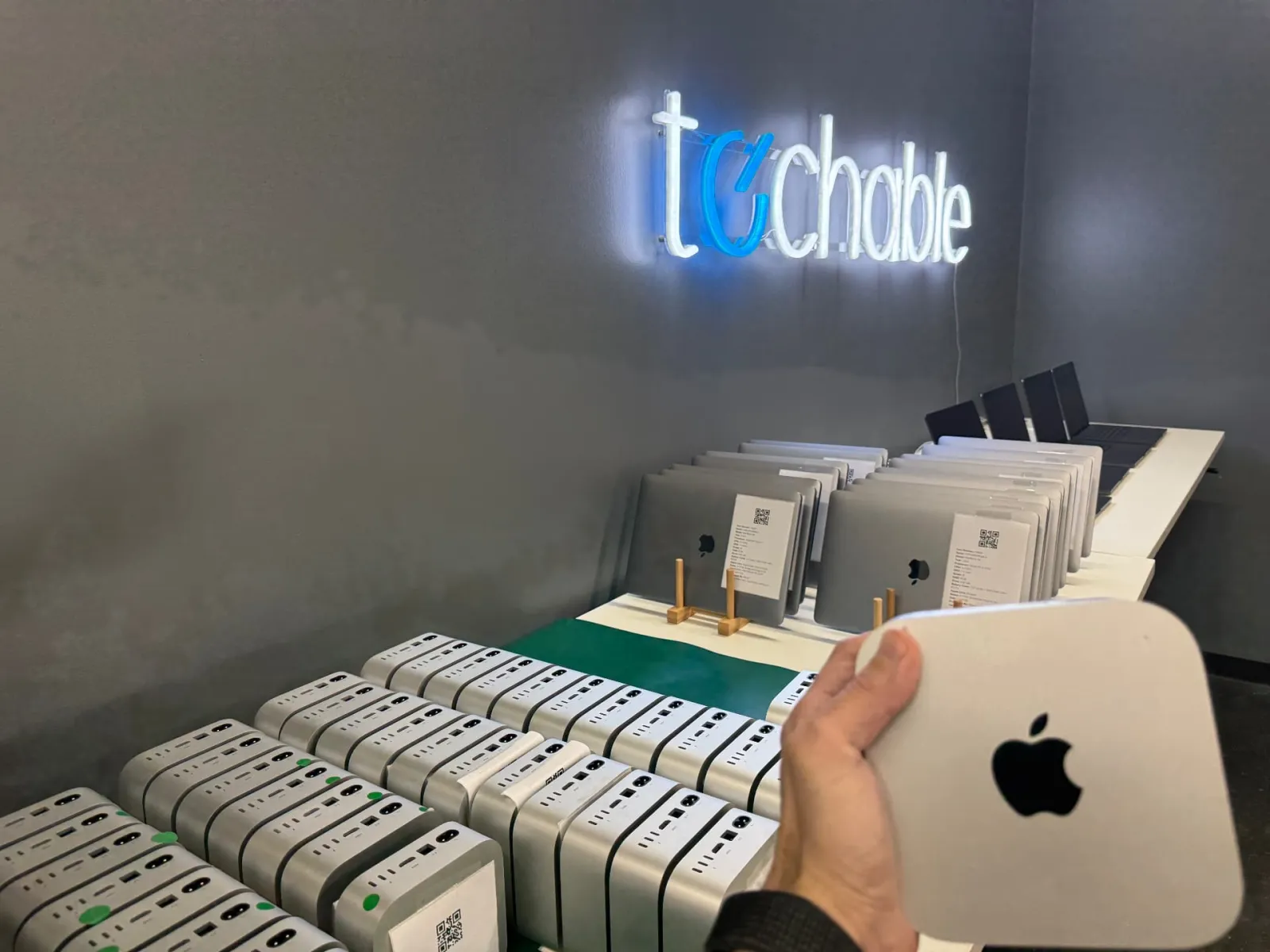
Four machines can teach me things a fifty-page business plan cannot.
How difficult is provisioning?
What breaks?
What do customers actually need?
How much support is involved?
Do the economics still make sense once we actually operate it?
If the answers are good, the idea earns another investment.
If they aren’t, I’ve learned something without building an entire company around an assumption.
That’s increasingly how I look at new ideas.
Your gut matters, but it isn’t proof
Not every part of this process comes from analysis.
Sometimes an idea hits me and I immediately feel like there’s something there.
I pay attention to that.
After enough years of building companies, doing deals, hiring people, making mistakes and watching patterns repeat, experience starts showing up as instinct.
But I’ve also learned that gut instinct and emotional reaction are not the same thing.
Fear can feel like instinct.
So can excitement, ego and FOMO.
I’ll go much deeper into that separately because I think learning the difference is one of the most important things experience teaches you.
For now, I treat my gut as a signal.
Then the numbers get a vote
An idea can feel right and still make no sense economically.
At some point, I need to understand what I’m actually risking.
What does this cost?
What could it realistically return?
How much capital gets tied up?
What happens if I’m wrong?
How reversible is the decision?
What am I giving up by pursuing this instead of something else?
Not every idea can be reduced to a perfect spreadsheet.
There will always be uncertainty.
But enthusiasm should have to survive some rational scrutiny.
Sometimes the numbers strengthen the idea.
Sometimes they quietly kill it.
Both outcomes are useful.
Stop trying to prove you were right
This may be the biggest shift in the way I think about ideas.
I’m not trying to prove that I was right.
I’m trying to discover what is true.
There’s a huge difference.
If your goal is being right, evidence that disagrees with you becomes a problem.
You explain it away.
You blame the test.
You add more money.
You convince yourself customers simply don’t understand yet.
If your goal is truth, bad evidence is still useful.
You can change the offer.
Change the customer.
Change the model.
Or kill the idea.
I’d rather be wrong quickly and cheaply than spend two years proving how committed I am.
Reality gets the final vote
You can have a strong instinct.
The economics can make sense.
The research can support you.
AI can find twenty reasons the idea should work.
And customers can still say no.
That isn’t the process failing.
Sometimes reality kills the idea.
Sometimes it confirms it.
And sometimes the original idea turns out to be wrong, but testing it exposes a better opportunity sitting beside it.
You don’t usually discover that by thinking harder about the original idea.
You discover it by moving.
The advantage is the loop
An idea leads to a decision.
The decision produces an experiment.
The experiment creates evidence.
The evidence changes what you know.
That experience goes into your next decision.
Do that enough times and your judgment improves.
You recognize patterns earlier.
You know which questions matter.
You notice warning signs sooner.
You get more comfortable walking away before sunk cost turns an idea into a mission.
Even your instinct becomes more useful because it has more real experience behind it.
That is why I think idea-to-market is a skill that compounds.
And AI may make that skill more valuable, not less.
If everyone can research faster, prototype faster and build faster, simply being able to build becomes less scarce.
The scarce part becomes judgment.
What deserves your attention?
Which assumption matters?
What should you test first?
When should you keep going?
When should you walk away?
The number of things we can build is exploding.
That makes deciding what should be built increasingly important.
I want to show more of the process
I’m constantly working through ideas across technology, ecommerce, hardware, AI, media and new businesses.
Some will work.
Some won’t.
Some will become something completely different from what I originally imagined.
I want to document more of those decisions before I know how the story ends.
Not just the polished retrospective after something succeeds.
What gave me the idea.
Why I thought it deserved attention.
What my gut was telling me.
What could have distorted my judgment.
How I challenged it.
What the numbers said.
Where AI helped.
What I decided to test.
And then, later, what actually happened.
Watching how someone reaches a decision can be more useful than simply being told what decision they made.
If you’re interested in ideas, technology, AI, business and the thinking behind building things, subscribe and follow along.
I’ll show you what works.
And I’ll show you when reality tells me I was wrong.
Related Operator Notes
- I Used to Spend $100,000 a Year Turning Ideas Into Products. AI Changed the Equation.For most of my career, ideas were abundant and execution was expensive. AI is changing that scarcity, and I think it will reshape entrepreneurship far beyond cheaper software.
- I've Been Buying and Selling Tech Since 2008. I'm Going to Start Opening Up the Playbook.Most of what I picked up since 2008 stayed inside the businesses. I am going to start sharing more of it, beginning with reseller lots built out of inventory we already have.
- A Profitable Flip Is Not a BusinessOne good resale decision proves almost nothing. What changes when the same decision repeats across hundreds or thousands of units, why inventory is cash sitting on a shelf, and what starts to matter more than margin.
Follow Brax
I post the short version on social. Techable Labs is where the YouTube work lives. The deeper notes live here.